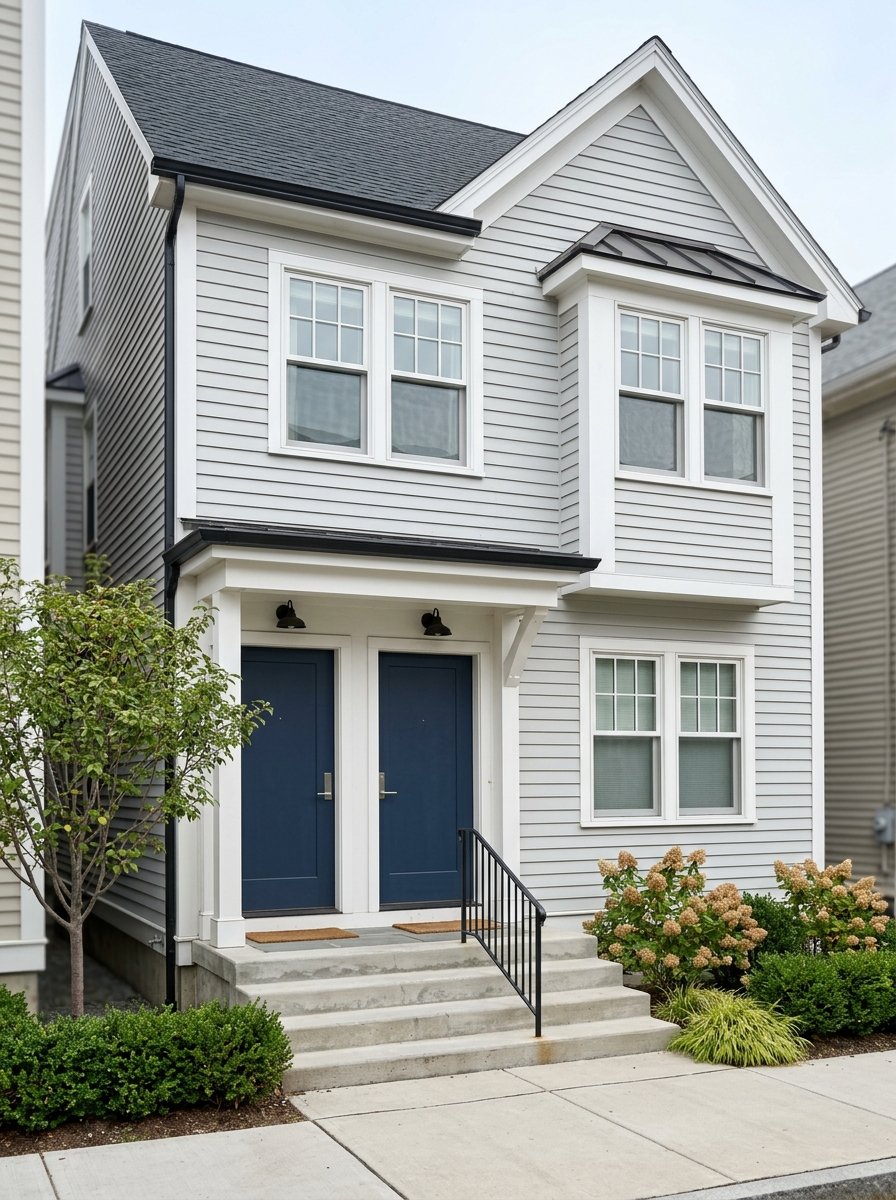
Thinking about buying a Bronx multifamily home and letting rental income help cover your housing costs? That idea can be powerful, especially in a borough where renting is common, vacancy is low, and small multifamily properties remain an active part of the market. If you want to understand how house hacking works in the Bronx, what the numbers can look like, and what responsibilities come with it, this guide will help you sort through the big pieces before you make a move. Let’s dive in.
Why house hacking fits the Bronx
House hacking usually means buying a property with multiple units, living in one unit, and renting out the others. The goal is simple: use rental income to offset your monthly housing expense while building equity in a home you own.
In the Bronx, that strategy gets extra attention for a reason. In 2023, the borough had 564,905 housing units, a rental vacancy rate of 2.1%, and a homeownership rate of 20.1%. That mix points to a renter-heavy market where well-located rental units may have steady demand.
The local housing stock also supports the idea. A Bronx Borough President policy paper using 2015 to 2019 ACS data found that multifamily buildings accounted for about 80% of Bronx housing units, with 2-unit buildings making up 8.7% and 3- to 4-unit buildings making up 8.4% of the stock. In plain terms, small multifamily homes are part of the borough’s housing fabric, not a niche property type.
Bronx rent trends matter
If you are considering house hacking, rent levels are a major part of the math. Bronx median gross rent rose from $1,250 in 2006 to $1,400 in 2023, and the median rent for 2- and 3-bedroom apartments reached $1,560.
The common rent bands are also useful for planning. Between 2019 and 2023, the largest share of studios and one-bedroom rentals fell into the $1,000 to $1,500 range, while the largest share of two-bedroom and three-bedroom rentals fell into the $1,500 to $2,000 range. That does not guarantee what any one unit will rent for, but it gives you a grounded range to think about when reviewing a property.
Small multifamily homes are also actively traded in the borough. In 2024, 2- to 4-family buildings recorded 1,057 sales, and the boroughwide median sale price per unit for that property type was $366,380. That tells you this is still a meaningful and active segment of the Bronx market.
What house hacking can help you do
For many buyers, the biggest appeal is lowering out-of-pocket housing costs. Instead of carrying the full payment alone, you may be able to collect rent from one or more units and use that income to reduce the pressure on your monthly budget.
There is also a longer-term benefit. If you buy an owner-occupied multifamily property, you are not only creating a place to live. You are also buying an asset that may produce income while you build equity over time.
That said, house hacking is not passive or automatic. In New York City, your results depend on financing, legal unit status, upkeep, compliance, and realistic rental projections. A property can look great in theory and still become expensive if you skip the details.
Bronx financing basics to know
FHA can be a common starting point
For first-time buyers, FHA financing often comes up first. HUD says FHA loans are available on 1- to 4-unit properties and may require as little as 3.5% down.
There is an occupancy rule you need to understand. At least one borrower must occupy the property within 60 days of signing the security instrument and must intend to stay for at least one year. That makes FHA a possible fit for true house hackers who plan to live in the home.
FHA has an extra rule for 3- and 4-unit homes
If you are looking at a 3-family or 4-family property, FHA adds another layer. HUD requires the property to pass a self-sufficiency test.
In simple terms, the mortgage payment, taxes, and insurance cannot exceed 100% of the property’s net self-sufficiency rental income. That net figure is based on the appraiser’s fair-market rent estimate for all units, reduced by vacancy and maintenance factors. So even if gross rent sounds strong, underwriting may still say the deal does not work.
Conventional loans may require more reserves
Conventional financing can also work for owner-occupied 2- to 4-unit homes. But the buyer profile often needs to be stronger.
Fannie Mae’s guide says Desktop Underwriter requires six months of reserves for a 2- to 4-unit principal residence transaction, measured in PITIA. Freddie Mac also allows rental income from units not occupied by the borrower to be counted when it is properly documented. This can help, but it also means paperwork, reserves, and lender review matter just as much as the expected rent.
Sample Bronx house-hack math
The numbers below are illustrative only and should be updated with current rates, taxes, insurance, and property-specific rent estimates before you rely on them. Freddie Mac’s Primary Mortgage Market Survey reported a 30-year fixed average of 6.36% as of May 14, 2026.
Example: Bronx 2-family home
Suppose you buy a $775,000 two-family property with 3.5% down at a 6.36% 30-year fixed rate. That creates a loan amount of about $747,875 and a principal-and-interest payment of about $4,658 per month.
If the rented unit brings in $1,900 per month, that would cover about 41% of principal and interest before taxes, insurance, vacancy, repairs, and reserves. That is helpful, but it also shows why buyers need to look beyond a simple rent-versus-payment comparison.
Example: Bronx 3-family home
Now suppose you buy an $800,000 three-family property with 3.5% down at the same rate. The loan amount would be about $772,000, with principal and interest around $4,809 per month.
If the two rental units each bring in $2,800 per month, gross rent would total about $5,600 per month. That is roughly 116% of principal and interest before taxes, insurance, vacancy, and maintenance. On paper, that can feel much more self-supporting, but FHA underwriting still focuses on net rental income and total housing costs, not gross rent alone.
Why the deal can work on paper but fail in real life
This is where many buyers get surprised. A property may seem affordable when you do quick math, but lenders and city rules look deeper.
Your credit profile, reserves, documented rental income, taxes, insurance, and unit legality all matter. If one of those pieces is weak, the deal may not qualify, or it may leave you with a much higher monthly cost than expected.
That is why it helps to review properties with both a financing lens and an ownership lens. You are not just buying a place to live. You are stepping into the role of an owner who has real operating responsibilities.
NYC landlord rules you need to verify
Confirm every unit is legal
Before you count on rent from a unit, make sure it is legal residential space. NYC HPD says owners must rent only legal residential space as defined by the Certificate of Occupancy.
This is one of the most important checks in a Bronx house-hack purchase. If a unit is not legal, you should not assume you can rent it, advertise it, or use that income in your planning.
Know your maintenance duties
NYC also expects owners to keep common areas and apartment units safe and well maintained. NYC Buildings says landlords must provide and maintain heat, hot and cold water, and good lighting.
If the property has three or more residential units, HPD says the owner must register annually. One- and two-family homes must also register if neither the owner nor immediate family lives there.
Prepare for lead-paint compliance
Many Bronx properties are older, so lead-paint rules can be a major issue. HPD says buildings built before 1960 are presumed to contain lead-based paint, and buildings built between 1960 and 1978 are also covered if the owner knows lead is present.
Owners must send annual notices, fix peeling paint using safe work practices, and keep records. NYC also emphasizes that safe-work requirements apply to pre-1978 housing. If you are buying an older multifamily home, this is not a minor detail.
Understand deposits and disclosures
New York has specific rules for security deposits and tenant disclosures. HCR says a security deposit on a vacancy lease can be no more than one month’s rent and must be held in an interest-bearing New York State bank account.
For vacancy leases in New York City, landlords must also provide bedbug infestation-history disclosure. These are basic compliance items, but they are easy to miss if you are focused only on the purchase side.
Check rent stabilization status
Do not assume every small multifamily home is market-rate. HCR says NYC rent stabilization generally covers buildings with six or more units built between 1947 and 1973, plus certain other units with tax benefits.
Many small Bronx house-hack properties may be market-rate, but some will not be. That means you need to verify status rather than make assumptions based on size or appearance.
How to evaluate a Bronx multifamily home
If you are serious about house hacking in the Bronx, focus on a few core questions before making an offer:
- Is each unit legal according to the Certificate of Occupancy?
- What are the realistic rents based on current market conditions, not wishful thinking?
- Will the financing program count enough rental income for you to qualify?
- Do you have enough reserves for repairs, vacancies, and lender requirements?
- What maintenance or compliance issues come with the building’s age and condition?
- Are there any rules, registrations, or stabilized units that affect your plan?
These questions can save you from buying a property that looks promising but becomes difficult once underwriting, inspections, and ownership costs come into focus.
The bottom line on Bronx house hacking
House hacking a Bronx multifamily home can be a smart way to reduce your housing costs in a borough with low vacancy, strong rental demand, and an active small multifamily market. But the strategy works best when you treat it like both a home purchase and a business decision.
If you stay realistic about rent, verify the legality of the units, and understand the financing and landlord rules that apply, you can make a much stronger decision. The goal is not just to buy a multifamily property. It is to buy one that truly supports the life and budget you want.
If you are weighing your options in the Bronx and want local guidance on buying a multifamily home that fits your goals, connect with Rahhim Shillingford. You will get responsive, neighborhood-informed support backed by real market insight.
FAQs
What does house hacking mean for a Bronx multifamily home?
- House hacking usually means you buy a 2- to 4-unit property, live in one unit, and rent out the others to help offset your monthly housing costs.
Can you use FHA financing to buy a Bronx multifamily property?
- Yes. HUD says FHA loans are available for 1- to 4-unit properties, may require as little as 3.5% down, and require at least one borrower to occupy the home within 60 days and intend to stay for at least one year.
What is the FHA self-sufficiency test for a Bronx 3-family or 4-family home?
- For FHA purchases of 3- and 4-unit properties, HUD requires that the mortgage payment, taxes, and insurance do not exceed 100% of the property’s net self-sufficiency rental income as calculated under FHA rules.
How strong is the rental market for Bronx multifamily properties?
- The Bronx had a 2.1% rental vacancy rate in 2023, median gross rent of $1,400, and median rent of $1,560 for 2- and 3-bedroom apartments, which supports the idea that rental demand can play an important role in house-hack planning.
What should you verify before renting out a unit in a Bronx house-hack property?
- You should confirm that the unit is legal residential space under the Certificate of Occupancy and review maintenance, registration, lead-paint, deposit, disclosure, and rent-stabilization rules that may apply in New York City and New York State.