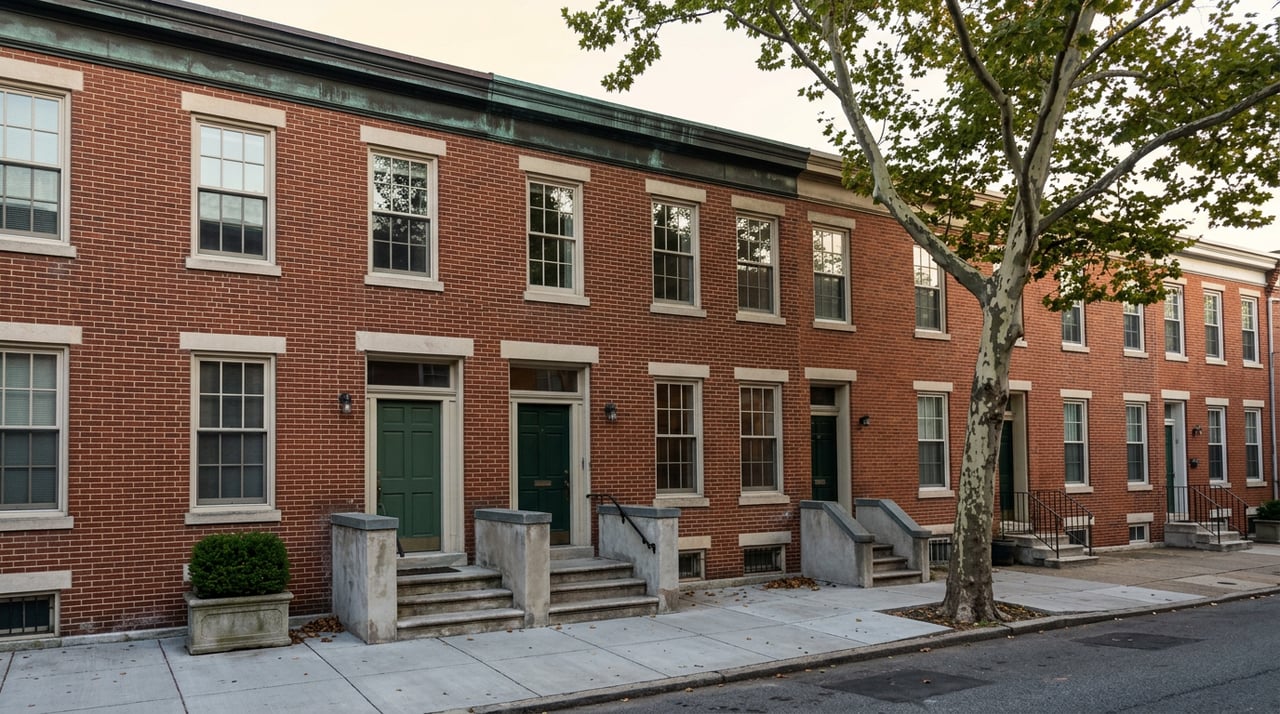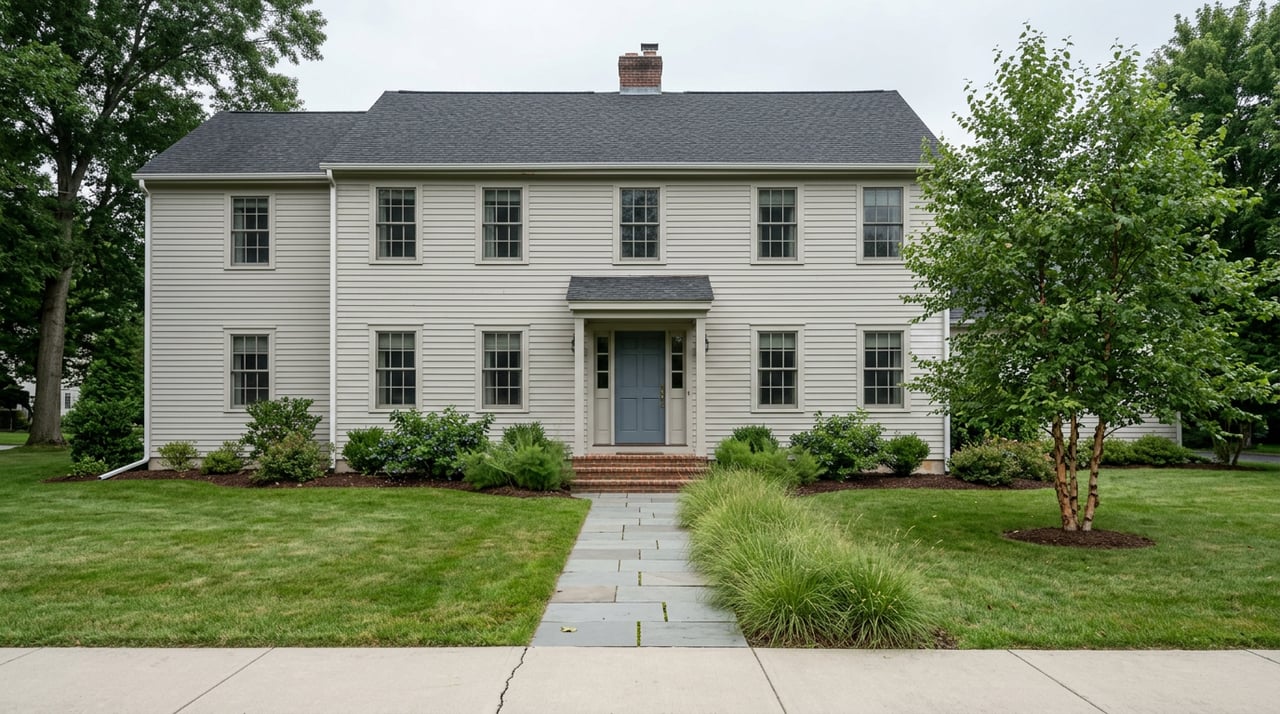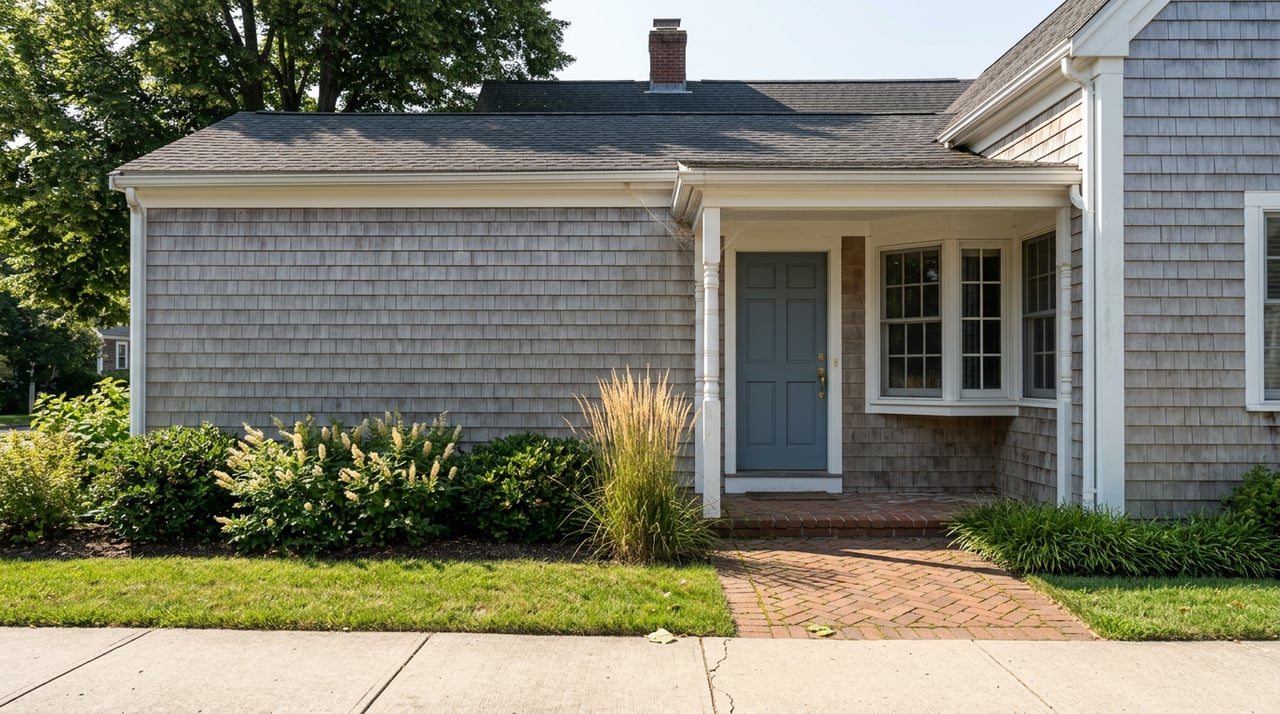
A house with a Scarsdale mailing address and the 10583 zip code sounds like a house in Scarsdale. It might not be. The zip code covers homes inside the incorporated Village of Scarsdale and homes outside it, and the Village treats the two groups very differently when it comes to the one resource that actually determines your daily commute: a permit to park at the train station.
This distinction rarely shows up on a listing sheet, and it's the kind of detail that only becomes visible once you're already living with the consequences. Two buyers can look at homes with the same price, the same school district reputation, and the same 37-minute average ride to Grand Central Terminal, and end up with completely different mornings, because one of them can park at the station and the other is circling the block.
The Boundary You Can't See in a Listing Photo
Every Metro-North town in Westchester issues its own parking permits, under its own rules, and almost none of those rules follow the zip code or neighborhood name printed on a real estate listing. They follow the legal boundary of the village or city, which is a line drawn on a map that has nothing to do with how the postal service groups addresses.
Scarsdale is the clearest example. Anyone with a Scarsdale PO address who lives outside the actual Town and Village of Scarsdale boundary is classified as a non-resident for parking purposes, no different from someone who lives forty minutes away and drives in. Resident permits at the Christie Place Garage and priority placement at the Freightway Garage go first to people inside the line. Everyone else waits behind them.
This is not a quirk unique to Scarsdale. Rye has an almost identical split, except the two categories are the City of Rye and the Town of Rye, which are separate municipalities that share a train station and very little else when it comes to parking rights.
Rye Has Two Kinds of Residents, and Only One Gets the Good Lot
Rye is worth walking through in detail because it shows how far the gap between "close to the train" and "able to use the train" can stretch.
The Rye train station has one MTA-operated commuter lot open to residents and non-residents alike, and the city's own current estimate puts the wait for a permit there at three to six years. The permit itself costs $1,105 a year. There is no partial-year rate.
Separately, the City of Rye also manages the Highland/Purchase and Cedar/Purchase lots, which are reserved for City of Rye residents only. If your house happens to sit in the Town of Rye rather than the City of Rye, an address distinction most buyers never think to check, those lots are simply not available to you regardless of how long you've lived nearby.
For everyone still waiting on a permit, Rye keeps about 100 all-day metered spaces near the station, priced at $5 for 12 hours. They fill by the 7 a.m. train most mornings, which means the backup plan disappears before the workday backup plan is even needed. Once a year, in November, the city runs an open sale for MTA lot permits, and by most accounts the available spots are gone within seconds of the sale opening.
None of this shows up when you're comparing a Rye listing to one in the next town over. It only shows up after closing.
How the Same Problem Plays Out Town to Town
The pattern repeats with local variations across the county. Some towns give you an escape hatch. Others don't.
| Station | Who gets the primary lot | What happens if you're not on that list |
|---|---|---|
| Rye (MTA lot) | Open to residents and non-residents, but the wait is measured in years | About 100 all-day meter spots at $5/12 hrs, typically full by the 7 a.m. train |
| Rye (Highland/Cedar lots) | City of Rye residents only | Not available to Town of Rye addresses at all |
| Scarsdale (Christie Place / Freightway) | Village of Scarsdale residents get priority; Scarsdale PO addresses outside the village do not count | ProPark America's private lot at 20 Freightway, open to non-residents, roughly a 2 to 3 month wait, though it tends to fill by 9 a.m. for daily parkers |
| White Plains | White Plains residents only, with a wait long enough that local guides describe it as effectively closed | The Lexington-Grove/Galleria garage a few blocks from the station, open to anyone, usually has open spots |
| Bronxville | Village of Bronxville residents only, issued first come first served starting each October 1 | A Resident Permit plus Prepaid Commuter Buyout option for people who ride daily, still resident-only |
| Katonah (Lot 3, non-resident) | Technically open to non-residents, but Town of Bedford residents get preference within that pool | No published alternative lot |
| Ardsley-on-Hudson | Irvington residents can apply through the Irvington Village Clerk for this neighboring village's lot, in addition to Irvington's own station lots | A waitlist applies here too, so it functions as a second line to stand in, not a shortcut |
The takeaway isn't that any one of these towns is a bad choice. It's that "close to the train" and "able to park at the train" are two different facts, and a listing only tells you the first one.
The Workaround That Has Nothing to Do With Permits
There is one variable that sidesteps this entire system: distance you can cover on foot.
None of the waitlists, lotteries, or residency rules above matter if you can walk to the platform. A house close enough to a station that a car never enters the equation makes the entire permit conversation moot, even if that same lot has a multi-year wait for everyone else.
This is worth weighing against square footage and yard size the same way you'd weigh commute time on its own. A larger house a mile from a station with a years-long permit wait can mean a harder daily commute than a smaller house a few blocks from the platform, simply because one requires a car you can't park and the other doesn't require a car at all. When you're touring, ask how far the walk actually is, not just how many minutes the train ride takes once you're on it.
What to Ask Before You Assume You'll Get a Spot
A few questions worth raising with your agent before you fall in love with a listing near a specific station:
- Does this address sit inside the actual village or city boundary, or does it only share the mailing zip code?
- Is the nearest lot open to non-residents, resident-only, or split into multiple lots with different rules like Rye's?
- Is there a private overflow lot nearby, and what does it actually cost and how early does it fill?
- Could you walk to the platform on a normal day, removing the parking question from your daily routine entirely?
- When does the town's application window open, and is it a lottery, a first-come sale, or a standing waitlist you'd be joining today?
None of these questions will appear on a comparative market report. They come from knowing the towns, not from reading the listing.
A Couple of Questions We Hear Often
If my zip code says Scarsdale, doesn't that mean I'm a Scarsdale resident for parking purposes? Not necessarily. The Village of Scarsdale draws its own boundary, and homes with Scarsdale PO addresses outside that boundary are treated as non-residents for permit purposes, even though the mail arrives the same way.
Can I ever use a permit at a station in a neighboring village? Occasionally. Irvington residents can apply for a permit at their own station and, separately, at the neighboring Ardsley-on-Hudson station through the Irvington Village Clerk. It's a village-to-village arrangement, not a general rule you should expect to find elsewhere in the county.
Is walking distance really a substitute for a permit? For daily commuters, often yes. A five-minute walk to the platform removes the parking question from your routine almost completely, which is worth factoring into how you compare two similarly priced homes near different stations.
If you're comparing towns based on commute and you want someone who can walk through which side of a village line a specific address actually falls on, that's the kind of local detail we build into every buyer conversation at Vision Alliance Realty. Start Your VIP Home Search and we'll help you separate what a listing says from what your mornings will actually look like.